Europe's Military Dependency Is in the Enablers, Not the Budgets
Europe provides none of its own exo-atmospheric missile interception and holds a fifth of NATO's military satellites. Rising budgets have not touched the capabilities that decide real autonomy.
The US provides 100% of Europe's mid-course missile interception, 83% of NATO's military satellites and 69% of its crewed surveillance aircraft. Europe's defence spending is rising fast, but it is buying platforms rather than the enablers that make autonomy possible.
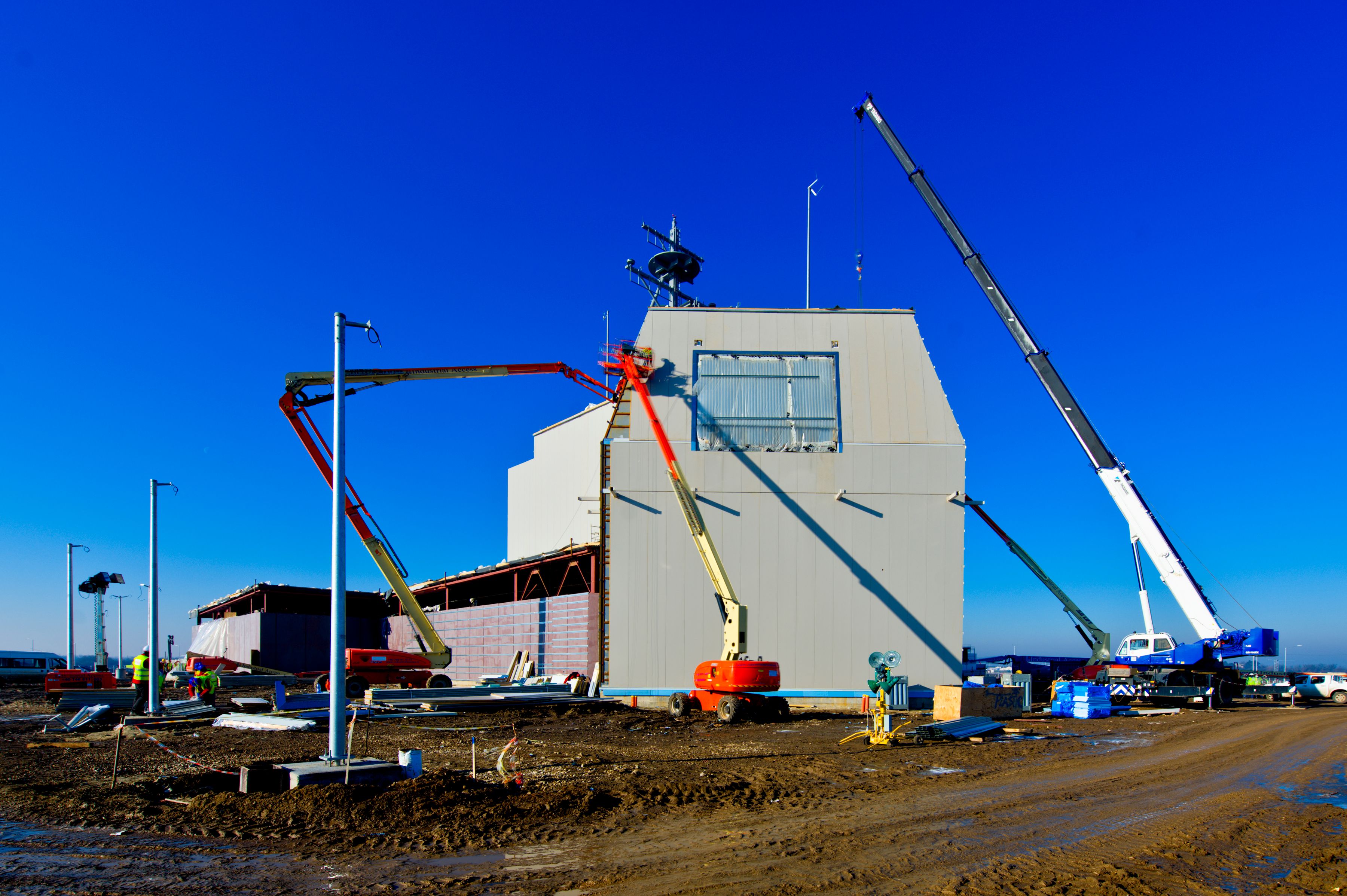
As of mid-2025, exo-atmospheric mid-course missile interception in Europe was provided solely by the United States. Not mostly. Solely. If a ballistic missile has to be stopped above the atmosphere over European territory, an American system does it or nothing does.
Europe has spent three years talking about strategic autonomy. On the capabilities that decide whether a continent can defend itself without permission, it has moved barely at all.
Four Numbers That Define the Dependency
The dependency is concentrated in enablers rather than in soldiers or tanks. European NATO members operate 49 military satellites against 246 American ones. On crewed intelligence and surveillance aircraft the ratio is at least 80 US to 36 European. Roughly half of Europe's active fighter fleet is American-made.
Europe's US military dependencies
| Capability | US share | Scope |
|---|---|---|
| Exo-atmospheric mid-course interception | 100% | Provided solely by the US as of mid-2025 |
| Military satellites | 83% | 246 US against 49 European NATO |
| Crewed surveillance aircraft | 69% | At least 80 US against 36 European |
| Active fighter jets | About 50% | US-made share of European air forces |
Source: IISS, Progress and Shortfalls in Europe's Defence (2025); CSIS (2025)
Shares are of combined US and European NATO holdings unless stated otherwise.
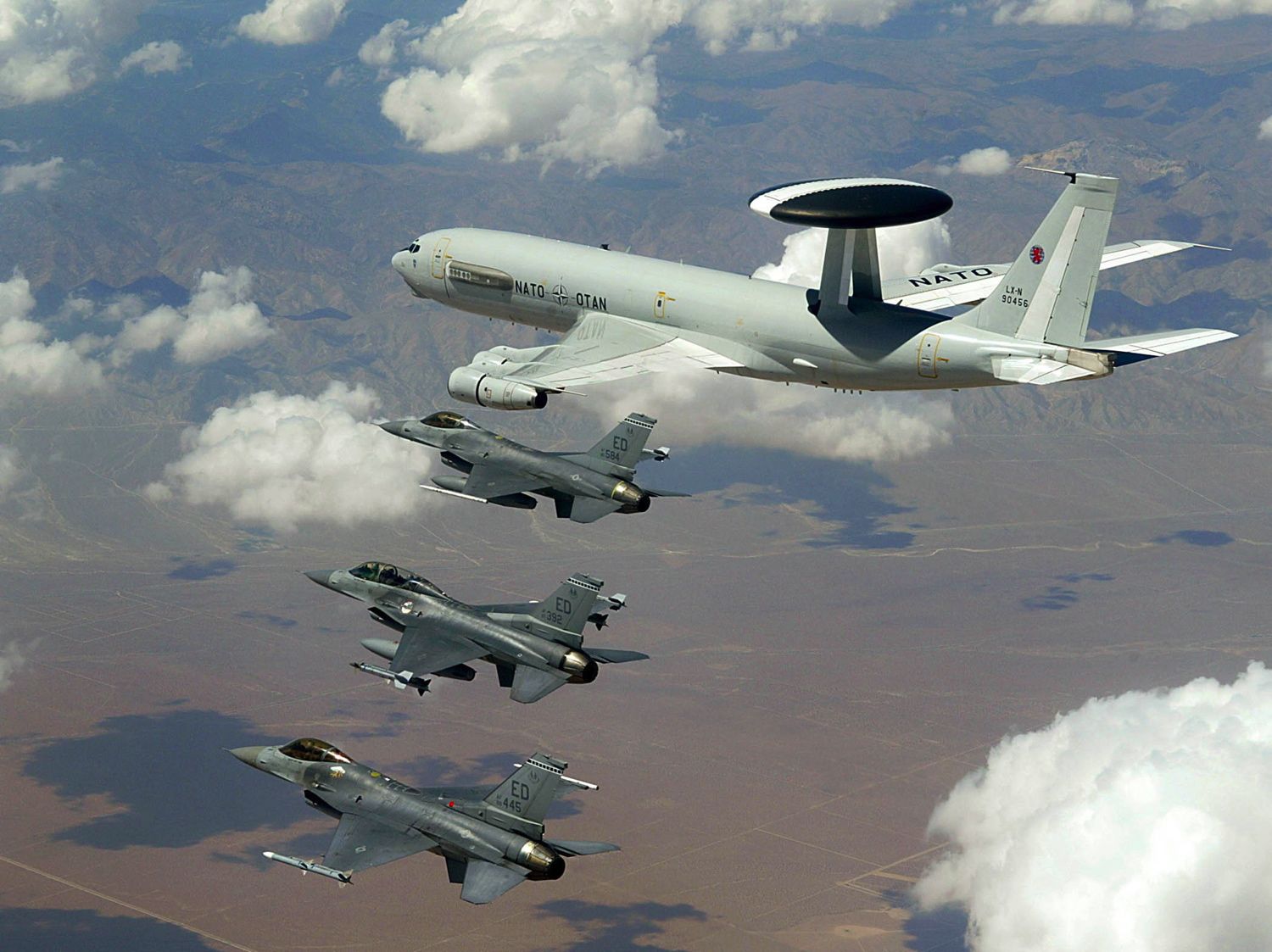
Figure 1
NATO's airborne early warning fleet flying with US fighters. On crewed surveillance aircraft the ratio is at least 80 American to 36 European.
Source: US Air Force, public domain, via Wikimedia Commons
The Gaps Are in the Plumbing, Not the Platforms
European governments like announcing equipment. Enablers are harder to photograph and harder to buy. Europe lacks a space-based missile early warning system entirely. France and Germany are building one, Joint Early Warning for a European Lookout, with an initial capability targeted for the early 2030s.
The IISS assessment is blunt about the timeline. Even under a burden-sharing model, Europe could not field a sovereign space-based missile early-warning architecture, match the scale of American intelligence and surveillance coverage, or replicate US space situational awareness within a decade. The hardest gaps to close are precisely the ones where dependency is deepest, because those capabilities are capital intensive, globally distributed and time sensitive.
What Europe has
- Capable combat aircraft and armoured forces
- A strong guided-weapons technology base
- Rising budgets, more than 50% above 2021 levels
- Two nuclear powers, France and the United Kingdom
What Europe lacks
- Space-based missile early warning
- Mid-course ballistic missile interception
- Persistent strategic surveillance at scale
- Air and missile defence in the required volumes
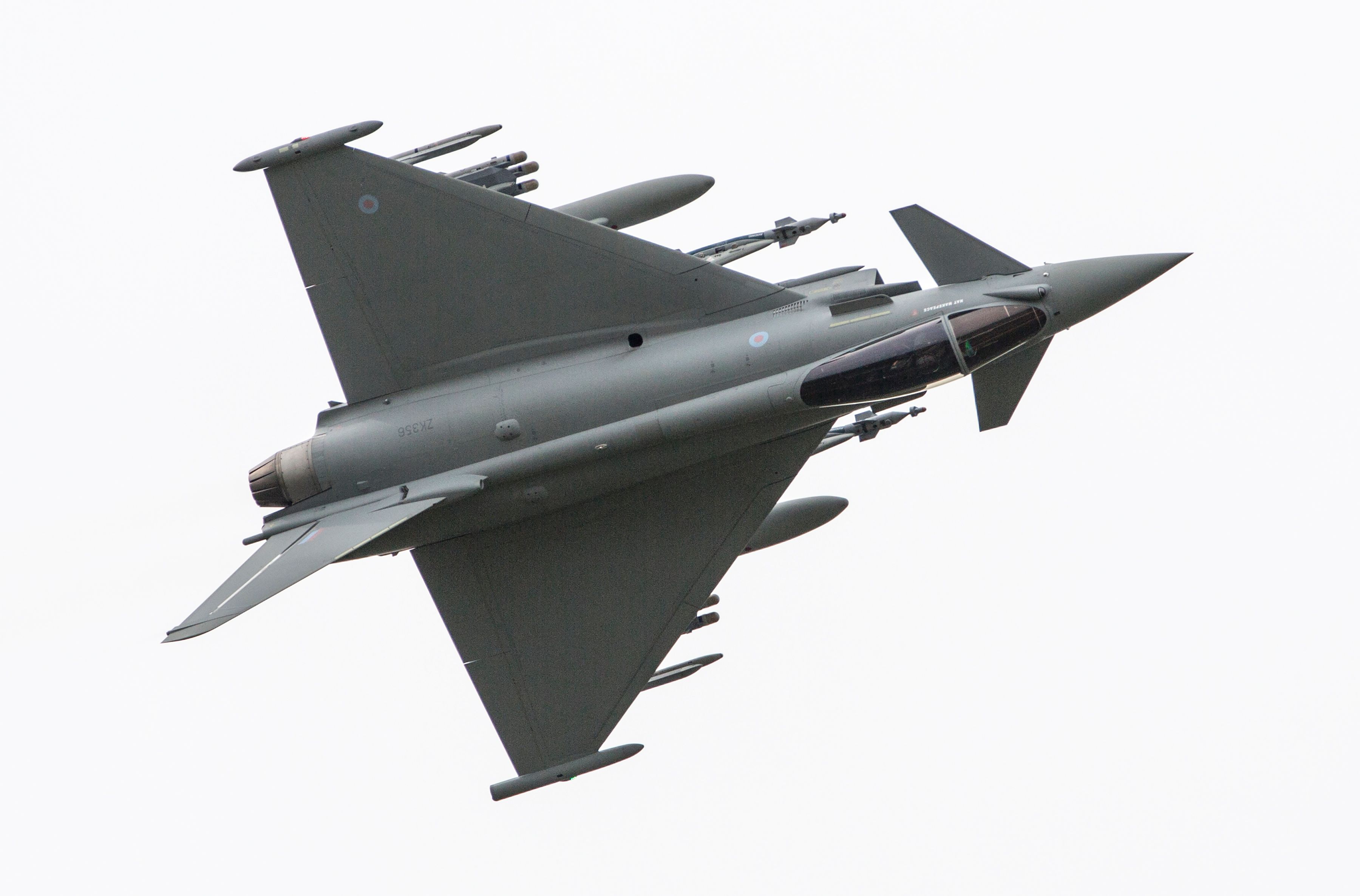
Figure 2
Roughly half of Europe's active fighter fleet is American-made. The aircraft are not the problem. What flies above and behind them is.
Source: SAC Tim Laurence/MOD, OGL v1.0, via Wikimedia Commons
A continent that cannot detect a missile launch on its own satellites, cannot intercept it above the atmosphere, and cannot see its own periphery without American aircraft is not defending itself. It is being defended.
Money Is Arriving. Coordination Is Not.
The funding picture has changed fast. European defence spending in 2025 ran more than 50% above its earlier level. Germany announced EUR 35 billion for military space capabilities by 2030. France added EUR 4.2 billion for military space between 2026 and 2030, with sentinel satellites planned from 2027. The EU has SAFE and the wider rearmament programme behind it.
The problem is that these are national answers to a continental problem. The IISS conclusion is that the investments are not structured around a coherent strategy to close the most consequential gaps within a decade. National priorities and mixed signalling at European level risk duplication in ballistic and hypersonic defence while the early-warning layer stays empty.
The Nuclear Question Is Already Open
In March 2026, Macron announced the first increase in the French warhead stockpile since 1992 and a doctrine he called forward deterrence, built around strategic partnership with seven European states, participation in nuclear exercises and the possible temporary deployment of French nuclear-armed aircraft to allied territory. The UK and France deepened their own nuclear cooperation in July 2025.
This is real movement, and it is also carefully limited. French command and control remains sovereign, and Paris has been explicit that forward deterrence complements rather than replaces the American nuclear guarantee. Macron's implicit bargain is that partners take on early warning, air and missile defence and conventional deep strike while France handles the nuclear layer.
That bargain only works if Europe delivers its half. Which returns to the same four numbers.
What a European Defence Pillar Requires
The goal is not a European army, which nobody will agree to, or leaving NATO, which would be self-defeating. It is a European pillar inside the alliance capable of operating without American enablers if it has to.
From dependency to a European pillar
| Policy Area | What Europe Needs |
|---|---|
| Early warning | Fund the Franco-German early-warning constellation as a continental programme, not a bilateral project |
| Missile defence | A European mid-course interception capability, with a named lead nation and a deadline |
| Space | A single architecture for ISR, secure communications and space situational awareness |
| Procurement | Joint purchasing of enablers, where duplication is most wasteful and scale matters most |
| Industry | Long-term order books so European suppliers can invest in capacity |
| Nuclear | Institutionalised consultation around the French and British deterrents, with common funding |
| Foreign policy | Qualified majority voting on sanctions and security decisions, so capability is usable |
Source: Article analysis
The last row is the one that gets skipped. Capability without a decision-making process is inert. A continent that needs unanimity among 27 governments to act cannot use the forces it is now paying for.
Conclusion
None of this is a case against the alliance. American capability underwrote European security for seventy years and still does, and the fastest route to a capable Europe runs through NATO rather than around it. The 2026 US defence authorisation mandates a minimum troop presence of 76,000 in Europe, which buys time.
Time is the one thing Europe keeps spending without noticing. A dependency that takes a decade to unwind has to be started a decade before it is needed. On early warning and interception, Europe is already late.
FAQ
Stay ahead of European policy
Get access to the Renaissance Europe Institute's full research library, strategic analyses, and embargoed policy briefs — free to read.
- Weekly policy briefings and strategic analysis
- Early access to embargoed research previews
- Full library of briefs, blueprints & scenario analyses
No paywall · open-access research